This is a short progress report of my current project – to describe how it was possible to transport a 44 ton siege howitzer close to the front line trenches, assemble it without needing cranes – just manpower (and the occasional tractor winch).
The gun was broken down into 6 tractor loads, each pulled to the front line by petrol tractors. At the selected site, which would usually be in amongst trees, a template is pegged out on the ground and the foundation excavated by two 19-man detachments. The individual loads are then winched across the excavation, and lowered using ratchet spanners operating on the nuts of lowering screw threads.
The first 4 loads (pivot, rear roller path, side girders and the gun carriage) are relatively straightforward to assemble in this way.
The 6 ton cradle and 9 ton gun loads have a more complicated system to install. I have built the models, but not yet animated this bit yet,
Constructing the gun needed to be unobserved by the enemy aircraft as far as possible, so much work was done at night, and the works covered by tarpaulins. Caterpillar tracks had to be erased.
‘buy me a coffee’ (https://www.buymeacoffee.com/vbbsmyt)
music: Moussorgsky ‘Pictures at an exhibition’, Colin Davis and Concertgebouw orchestra (1979/1980) published on a Phillips CD. (license pending)
Animation made using Cinema $D, quicktime and iMovie.
References:
Handbook of the B.L. 12-Inch Hpwitzers Mark II on Siege Carriages, 1918
Imperial War Museum Film 218 – ‘With Britain’s Monster Guns in Action’

Hi, I’m Rob, otherwise known as VBBSMYT.
I create the animations on my iMac using Cinema 4D, which I find very intuitive, and allows me to add smoke and flames, and then send the model to my trusty Render farm.
I make my models as accurate as possible through reference books and particularly good drawings. You may have seen my animations of early torpedoes and machine guns on YouTube. I enjoy finding out how things work and it has been fascinating to track the development from the late Victorian period up to World War 1.
Items you may have missed...
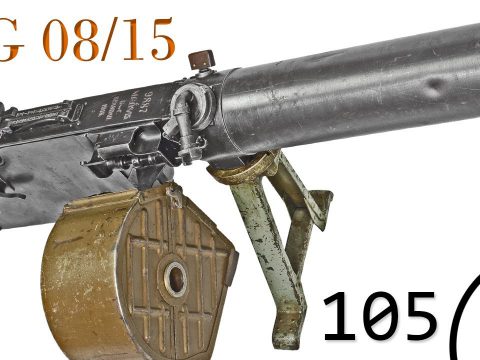 Small Arms of WWI Primer 105: German MG 08/15
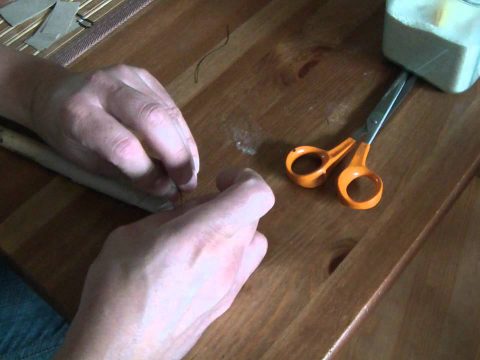 Contruction of US 1861 paper cartridge for civil war rifle muskets
 On The Range: Sterling Mk.4 / L2A3 SMG blocked at semiauto
 Colt Walker Revisited
 Origins of the vz.82: A Western Pistol for Communist Czechoslovakia
 Ukraine Captured a Russian Turtle Tank 🐢